
After years of self-analysis, a genetic brain profiling session forced me to confront how much my environment had shaped and suppressed me.
There are moments in life when clarity does not arrive through a dramatic breakthrough or a perfectly timed epiphany. Sometimes, it arrives quietly through a conversation that reaches parts of you that have been sitting in confusion, self-analysis, doubt, and observation for years.
This week, I experienced one of those moments.
Curiosity, Skepticism, and a Psychology Background
A few months ago, I had my fingerprints collected for a genetic brain profiling assessment by Rachna Mittal. At the time, I approached it more as an intellectual curiosity than anything else. Coming from a background in Psychology and Social Work myself, I have always been deeply fascinated by human behaviour, personality, emotional wiring, psychoanalysis, self-awareness, and the invisible frameworks that shape people’s lives.
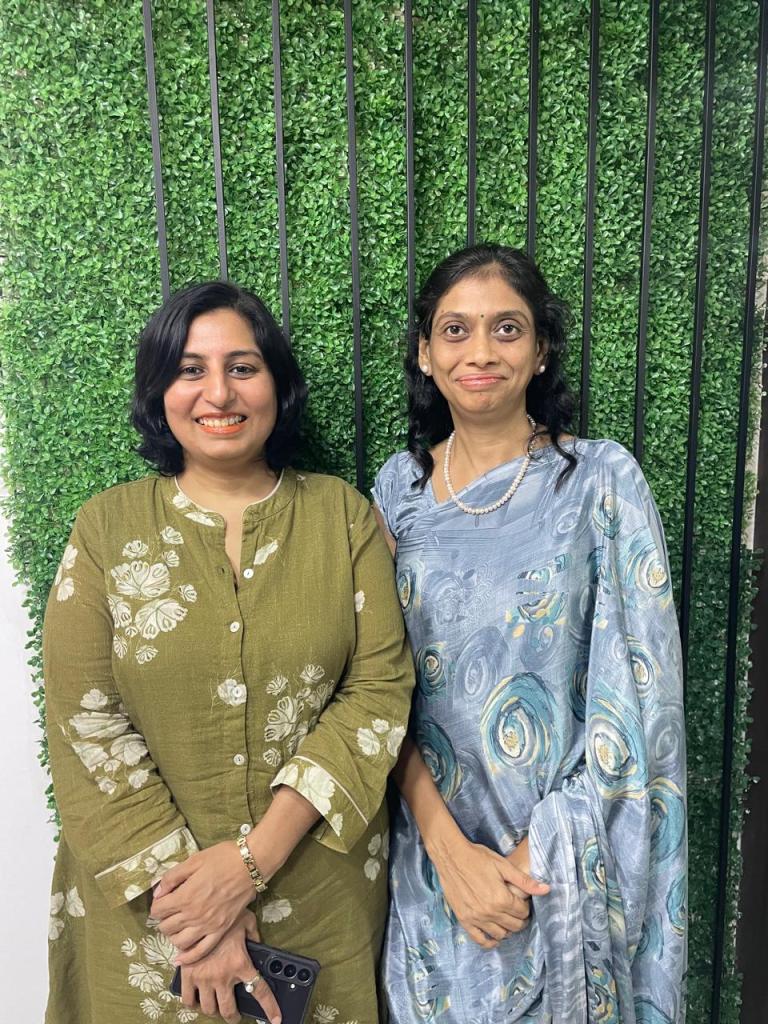
Rachna herself comes from a psychology background, practices therapy and coaching where possible, and also works with genetic brain profiling. She has worked with more than 300 individuals and families so far. She also has a diploma in transactional analysis, which made me feel more comfortable engaging with the process because there was psychological grounding behind the experience rather than vague motivational language.
The Nature Versus Nurture Question That Never Left Me
For years, psychology has wrestled with the nature versus nurture debate. Are we shaped primarily by genetics and inherited traits, or are we shaped by our environment, experiences, relationships, trauma, and conditioning? I have always believed that personality is not created by one or the other alone. We inherit certain tendencies, sensitivities, capacities, strengths, and traits from our ancestors, but our environment determines how much those traits are encouraged, reinforced, distorted, suppressed, or allowed to flourish.
That debate has always fascinated me because I have spent years observing it not only academically, but also within myself.
When Personality Tests Kept Repeating the Same Story
Over the years, I repeatedly tested as a strong INTJ-A personality type. Even when I revisited personality tests intermittently through different phases of my life, the results remained surprisingly consistent. Back in 2004, however, I had also been assessed as more of an ambivert, with stronger creative and musical intelligence than analytical dominance. Somewhere along the way, I had often wondered whether life had slowly moved me away from that creative core and pushed me more toward analytical, strategic, and systems-oriented spaces.
This week’s session brought many of those thoughts back into focus.
The Shock Was Not the Profiling. It Was the Accuracy.
What startled me was not merely the profiling itself, but how deeply accurate it felt. It described me as someone who is equally creative and analytical, deeply introspective, highly self-aware, intensely perfectionistic, and capable of operating between structured systems thinking and creativity. The experience did not feel like somebody was ‘telling’ me who I was. It felt more like someone articulating observations I had privately carried within myself for years but had never fully trusted or validated.
And perhaps that validation mattered more than I expected.
I realised that over the years, my environment had not fundamentally changed me as a person. Instead, it had reinforced certain traits while suppressing many strengths that naturally existed within me. The analytical side became stronger because it was rewarded. The perfectionism intensified because survival often demanded it. The introspection deepened because life repeatedly forced emotional self-processing. At the same time, many softer, creative, instinctive, and emotionally expansive parts of me had quietly been pushed into the background.
The biggest realization I took away from the session was not actually about personality itself.
It was about environment.
Realizing My Environment Had Reinforced Survival Traits
For perhaps the first time with complete clarity, I understood that the environment around me is not supporting me enough. In many ways, it reinforces stress, exhaustion, overthinking, emotional suppression, hyper-independence, and self-doubt instead of helping me grow into my strongest self. The session made me realise that if I genuinely want to evolve, I need to consciously and proactively redesign parts of my environment, my routines, my support systems, my habits, and even the kinds of spaces and people I surround myself with.
That realization stayed with me long after the session ended.
Rachna also suggested exercises and practices that could help me improve in certain areas over time. I appreciated that immensely because I have already spent years doing self-development work independently through books, reflective writing, structured introspection, observation, and psychological frameworks written by psychologists, psychoanalysts, and psychiatrists.
Entrepreneurship, especially in the climate and sustainability space, demands enormous emotional resilience, discipline, systems thinking, and psychological endurance. Continuous self-work becomes necessary in order to survive such spaces without burning out emotionally or mentally.
At the same time, I have always struggled with a strange paradox.
I can dissect myself with extraordinary clarity, but actually working toward improving myself consistently is much harder.
Self-Awareness Does Not Automatically Become Action
Insight alone does not automatically create action.
I can understand my patterns, identify my emotional responses, recognise my strengths and weaknesses, and intellectually process almost everything happening within me. But translating that awareness into consistent behavioural change often requires an external push. Sometimes, even highly self-aware people need someone outside themselves to provide perspective, structure, accountability, or validation before they can begin moving forward.
That is perhaps why this experience affected me so deeply.
Why Traditional Therapy Never Fully Worked for Me
I have also been critical of therapy at times, not because I dismiss its importance, but because my own Psychology background changes the experience for me. During therapy sessions, I often find myself unconsciously analysing the therapist instead of fully immersing myself emotionally. I begin identifying frameworks, predicting intervention styles, understanding where the conversation is heading, and mentally dissecting the process itself. That level of analytical detachment interferes with emotional surrender.
This experience felt very different.
The session created a psychologically safe and objective space where difficult truths could be communicated gently without making me defensive or emotionally overwhelmed. Rachna presented sensitive observations in a way that allowed me to absorb them instead of instinctively resisting or challenging them. She communicated things carefully enough that they could settle within me without triggering emotional resistance.
And that mattered.
Because emotional work is exhausting.
Sometimes People Do Not Want Emotional Excavation. They Want Clarity.
A lot of people do not necessarily want to constantly engage in deeply emotionally heavy therapeutic work where they are repeatedly revisiting trauma, unpacking painful memories, reliving emotionally difficult experiences, and verbally processing every thought sitting inside their minds. That kind of work is incredibly important for many people, but it is also emotionally demanding, time-consuming, and financially inaccessible for others.
Not everybody has the emotional bandwidth, time, or financial capacity to attend regular therapy sessions continuously.
And for many introspective people like me, verbal emotional expression itself can feel difficult.
People like me are often more comfortable processing through writing, documenting, archiving thoughts, journaling, recording reflections, or privately observing ourselves rather than verbally narrating every emotional layer to another person. Sometimes, even speaking those thoughts aloud can feel uncomfortable.
Including with AI tools like ChatGPT.
Sometimes what deeply introspective people seek is not constant emotional excavation. Sometimes what we need is clarity, validation, perspective, structure, and a gentle external push that helps us independently work on ourselves afterward.
This experience gave me exactly that.
It gave me a sense of clarity at a time when I had been second-guessing many things internally. I had been questioning my instincts, capacities, direction, emotional responses, and whether I was truly understanding myself correctly. The session did not magically ‘fix’ anything, but it helped organise scattered internal thoughts into something more coherent, compassionate, and actionable.
Learning to Work With Myself Instead of Against Myself
For the first time in a long while, I felt less like I was trying to ‘fix’ myself and more like I was finally learning how to work with myself instead of against myself.
And perhaps that is the most important shift of all.
I am also deeply grateful that this came from someone I felt emotionally safe and professionally comfortable with. Rachna belongs to the same professional circles and communities I engage with, and there was already a sense of trust and psychological safety in the interaction. That made it easier for me to absorb difficult observations without feeling judged, emotionally cornered, or misunderstood.
I genuinely hope the exercises and frameworks she suggested help me slowly rewire certain patterns and push me toward taking action in areas where I have been lagging internally despite being aware of them for years.
Because self-awareness alone is not transformation.
But sometimes, clarity delivered at the right moment, by the right person, in the right way, can finally become the beginning of it. I am extremely grateful to Rachana for this and I definitely owe her.


Leave a comment