How physical fandom spaces are shaping emerging consumer economies in an increasingly virtual world.
I spent a day at Comic-Con and, somewhere between cosplay hunts and K-pop performances, found myself noticing market signals. The line between escapism and economics felt surprisingly thin.
The venue was already buzzing when I walked in. Music spilled out of one hall, camera flashes went off in another, and clusters of fans stood in circles adjusting wigs, swords, jackets, and wings with the seriousness of costume designers before a premiere. The K-Wave India had a session scheduled, and I watched K-pop cover groups perform with the kind of commitment that turns hobby into discipline. Some of them I had seen perform back in December. Different stage. Same intensity. Fandom does not disappear. It migrates. It rebuilds itself.
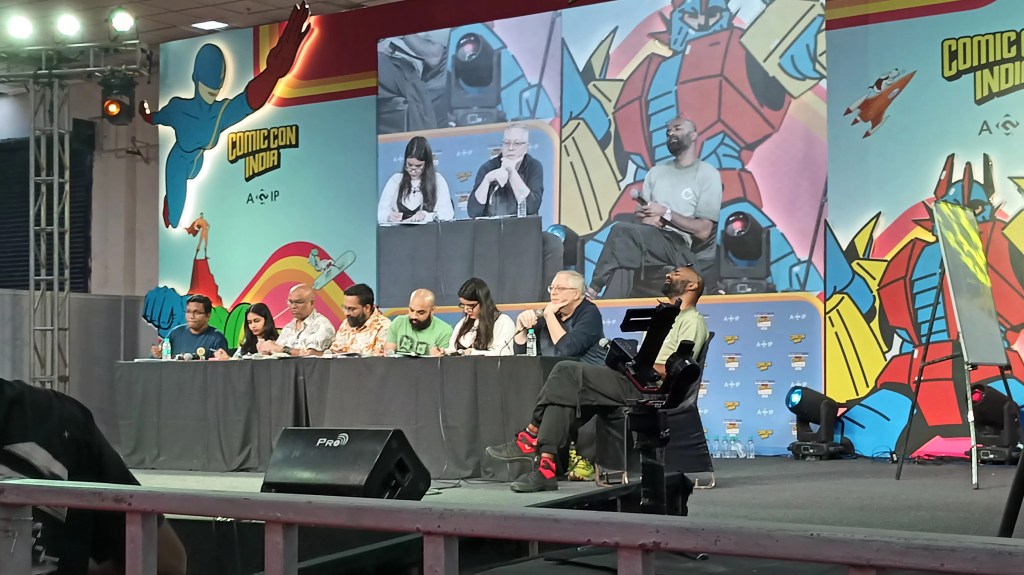
One of the most fascinating sessions of the day was the Comic-Con Creator’s Jam featuring Ron Marz, Savio Mascarenhas, Saumin Patel, Indian Scribbles, Roshan Kurichiyanil, and Satan Navi. It was not just a casual panel. It was a live demonstration of craft.
They spoke about writing and drawing comics seriously. Deadlines. Discipline. Story arcs. Character structure. Visual storytelling. Then they turned the crowd into collaborators. The audience picked a random comic title and threw out character names. Within minutes, right there on stage, they built a mini comic from scratch. Plot. Panels. Expressions. Punchlines.
In under five minutes.
Watching that unfold felt like witnessing structured creativity in real time. It was playful, but it was not careless. There was instinct, yes. But also years of training behind that instinct.
That moment stayed with me.
Because beneath the costumes and chaos, Comic-Con is also about creators who treat imagination as serious work.
Then I switched into full cosplay-spotting mode.
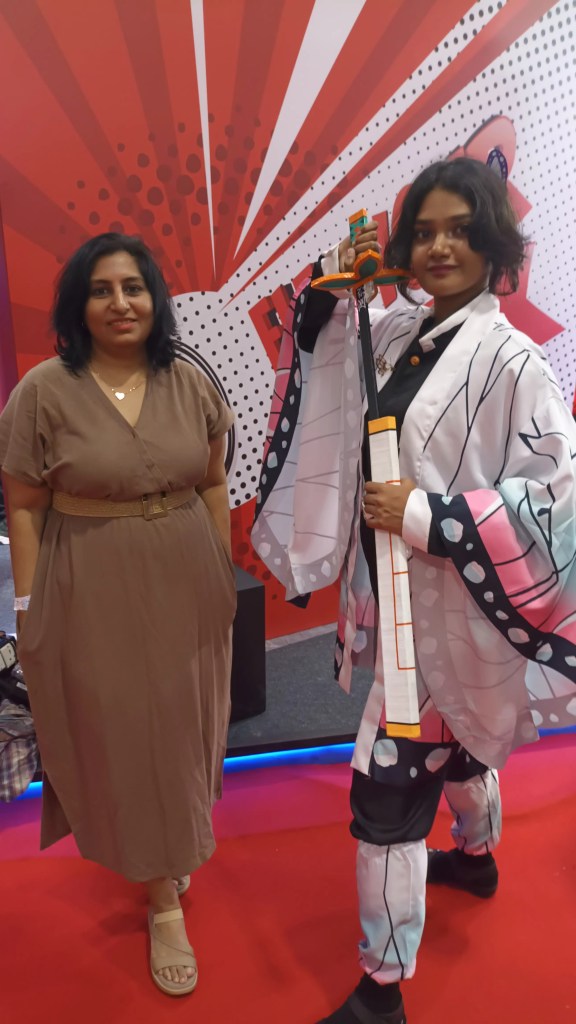
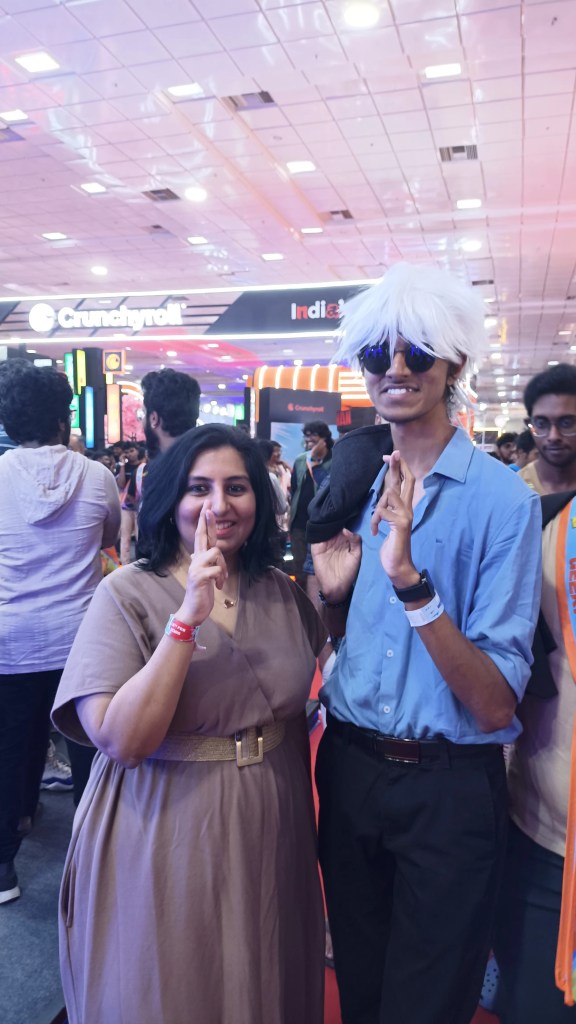
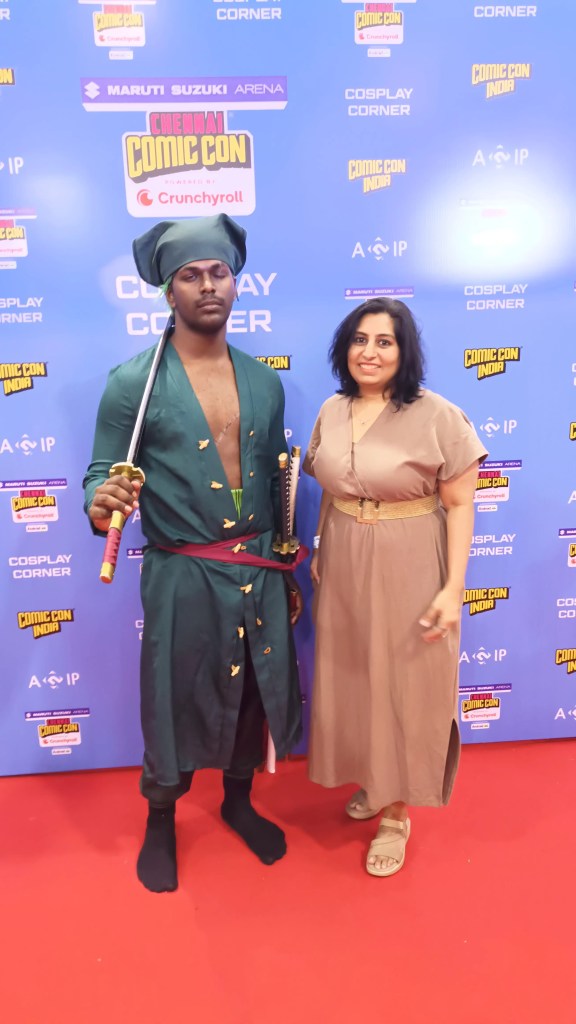
I was not casually browsing. I was scanning the crowd for specific silhouettes. A flash of white hair. A green bandana. A butterfly hairpin.
And I found them.
Gojo Satoru, with his Limitless technique.
Roronoa Zoro, grounded and composed with this three swords.
Shinobu Kocho, graceful and quietly lethal, the Insect Hashira.
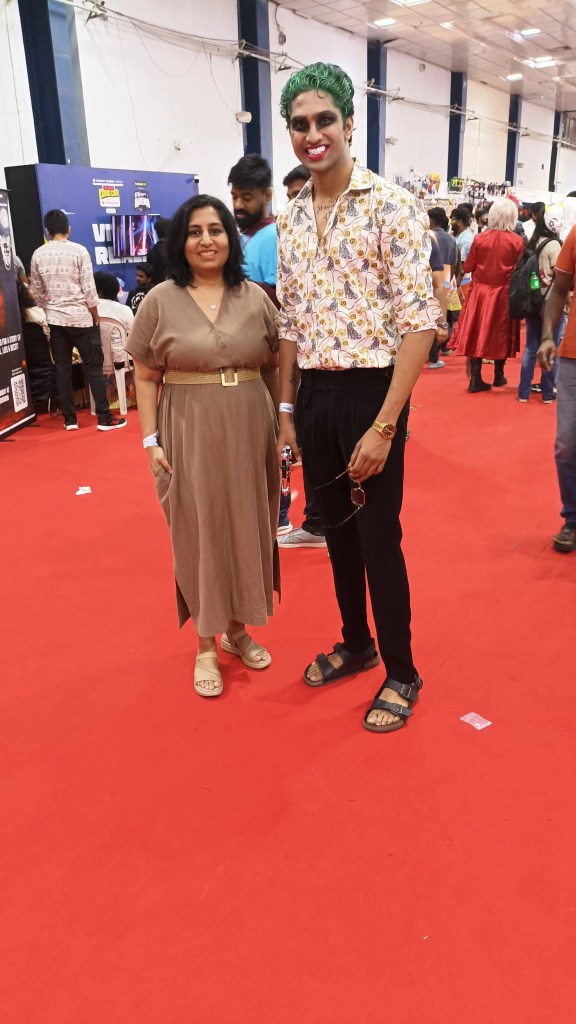
Joker from Suicide Squad appeared unexpectedly. Not on my checklist. But chaos rarely waits for invitations.
There was no Zenitsu Agatsuma. Not even an Akaza. No dramatic lightning streak cutting through the crowd. No upper-rank demon intensity. That absence felt oddly personal, like a casting gap in an otherwise complete lineup.
For a few hours, real-world hierarchies dissolved. No climate decks. No advisory calls. No strategy conversations. Just shared universes. Strangers bonding instantly over fictional lore. Inside jokes exchanged without explanation.
The merchandise stalls were another ecosystem entirely. Rows of figurines sealed in plastic. Limited editions. Signed prints. Posters preserved like artifacts. After watching King of Collectibles, I could not look at them innocently. I saw pricing psychology. I saw scarcity engineering. I saw nostalgia packaged carefully and monetized with precision.
I did not buy anything. My inner collector was excited. My inner strategist stayed calm.
Still, I lingered. I watched how people handled items gently, how they justified purchases to friends, how they negotiated. Culture carries its own currency.
Geeking out, I realize, is my free therapy.
Anime. Manga. Fantasy novels. Science fiction worlds. They interrupt the constant hum of responsibility. They offer structured universes where rules are clear, even when battles are not. They allow the mind to move without deliverables attached.
As a writer, I pay attention to how stories are built. How tension rises. How power is distributed. How characters fracture and rebuild. Through these worlds, I reflect on ethics and morality more often than I consciously admit. What does strength mean. What does loyalty cost. What does justice look like when institutions fail. Fiction creates safe arenas to examine uncomfortable truths.
This love for fantasy is not new. Harry Potter and Lord of the Rings were early portals for millennials. I remember the midnight releases. The collective waiting. Entire generations growing up in Hogwarts corridors and Middle-earth landscapes. Anime and manga entered my world around 2011, through my cousin. What once felt niche now feels global.
And yet, even in the middle of all this immersion, my business and investor lens does not fully switch off.
We talk endlessly about virtual futures. AI-driven systems. XR environments. Holograms. Increasingly digitized lives. Yet spaces like Comic-Con are thriving because they are physical. Because they are embodied. Because standing next to someone dressed as your favorite character creates a memory no headset can replicate.
Experiential markets are quietly scaling. Consumer tech around fandom. Collectibles. Live events. Immersive communities. Some investors are already building meaningful returns in these spaces. They may not sound as science-heavy as frontier technologies, but culture compounds differently. It builds loyalty. It builds identity. It builds repeat participation.
It has not fully gone mainstream in India yet, but the signals are clear. These ecosystems are forming. And somewhere between Gojo and growth capital, I see opportunity.
Escapism is not always escape. Sometimes it is reflection. Sometimes it is regulation. Sometimes it is research.
You step into other worlds to understand this one better.
And then you return, steadier.
 Deepa Sai
Leave a comment