Why education, employment, and skill-building are failing to keep pace with AI, geopolitics, and real-world economic systems, from what I’m seeing on the ground
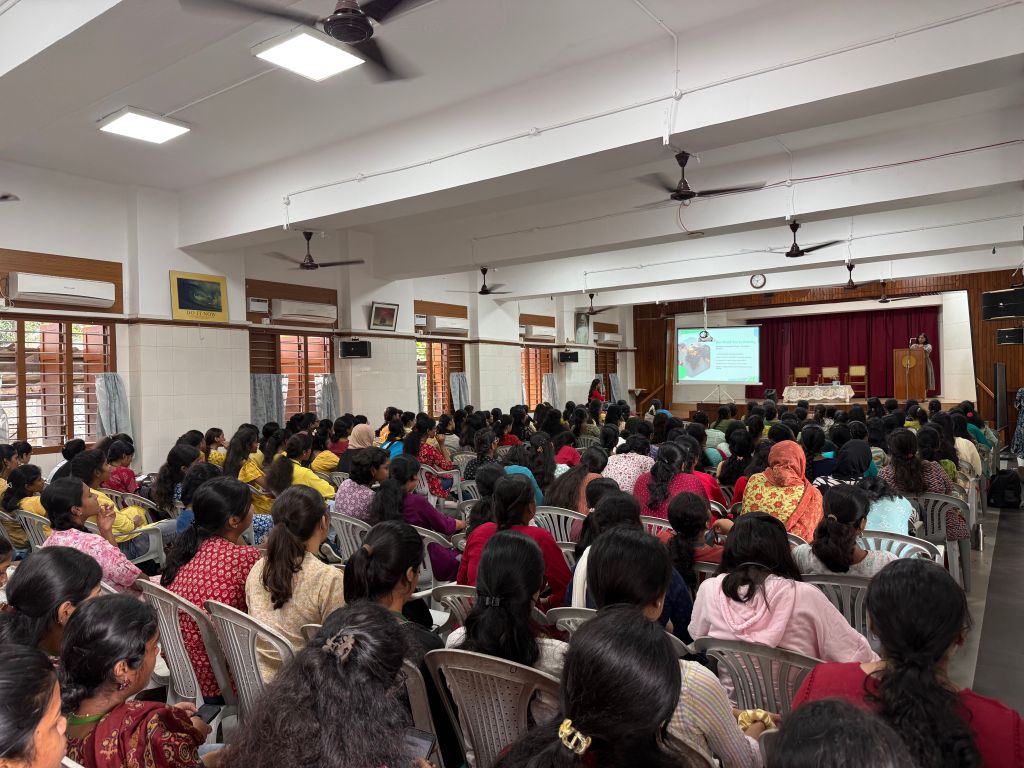
What I keep seeing when I walk into colleges
Over the past year, while visiting multiple colleges and interacting with students across different departments, I have been noticing some deeply troubling patterns.
Most students, especially those from affluent backgrounds, still believe that getting a full-time job will secure their lives. They think employment equals stability. They assume that once they get placed, everything will fall into place.
At the same time, these very students are anxious. They constantly ask questions about artificial intelligence taking away jobs. They worry about automation replacing work in manufacturing, operations, analysis, and even white-collar roles. There is a deep fear about relevance and competition.
The contradiction no one seems to want to sit with
And it is playing out right in front of us. On one side, there is anxiety about AI and job loss. On the other, there is a belief that they still have the luxury to choose, reject, or pivot jobs, prioritise work-life balance, and keep experimenting. Many believe they will always have options.
The reality is very different. Even those who do get jobs are increasingly becoming corporate dependents. They are not as free as they imagine. They rely on organisations for income, security, and identity. What looks like choice is often just another form of dependency. Everyone is slowly becoming a corporate slave, even if the language around it has softened.
What’s missing is not ambition, it’s systems thinking
It is not about intelligence or drive. Very few students are pausing to ask what is actually broken in the ecosystem they are entering. They are not thinking about supply chains and where those supply chains are weak or fragmented. They are not observing where infrastructure development is happening and what kinds of industries are being built around it. They are not connecting skills to policy decisions, geopolitics, or long-term economic shifts. They don’t seem to have the luxury to do so when they are busy fighting external pressures and internal anxieties.
Most career thinking remains surface-level and reactive.
You can’t hype your way through structural change
Most students are not thinking deeply enough about what kinds of skills will survive and what kinds of skills will become obsolete. They are not grounding their learning in how technology is already replacing human work on the ground.
They are not aligning their choices with how policies, geopolitics, and global trade decisions are shaping local ecosystems, jobs, and markets.
At some point, you cannot keep hyping everything (like the EU-India deal). People need to learn economics and geopolitics to understand what is actually happening behind the scenes. Trade deals, wars, sanctions, alliances, and policy decisions directly affect industries, supply chains, employment, and livelihoods. Without this understanding, decisions about careers and businesses remain shallow.
The startup story isn’t helping either
At the same time, the startup ecosystem is feeding a distorted narrative. There is too much focus on pitching, grants, and visibility, and too little focus on execution, responsibility, and long-term impact. Many half-baked business ideas receive funding because of access, influence, or networks. Meanwhile, people doing serious, grounded work without influence struggle to get support.
This creates a false belief that starting up is easy or glamorous. The reality of the hustle, the uncertainty, and the responsibility involved is rarely shown honestly.
Two very different student realities, both failing
On the other end of the spectrum are students from marginalised populations. This is not about first-generation learners specifically. This is about students under real economic pressure.
Many are constantly looking for part-time jobs, gig work, or daily income through delivery platforms and informal work. Their attention is not weak because they do not care. Their attention is fragmented because survival takes priority.
So education is currently failing both ends of the spectrum. Affluent students are insulated by aspiration and entitlement. Marginalised students are constrained by economic stress.
Mental health, distraction, and the inability to sit with one thing
Alongside this, there is a growing issue of mental health challenges and attention span disorders.
Many students are unable to sit with one subject long enough to understand it deeply. They struggle to give dedicated attention to even one discipline. Even when they are not specialising, they are not engaging with fundamentals, theories, or core concepts.
Most of them are constantly scanning for part-time work or quick income instead of spending focused time learning something properly.
‘AI will teach me’ is not the same as learning
There is also a growing belief that everything can be outsourced to AI. That AI will teach them. That AI will answer every question. That lecturers may no longer be needed. While AI can provide information and explanations, it cannot replace the need to develop one’s own intelligence.
To use AI well, you still need strong IQ, pattern recognition, conceptual clarity, and depth and proper exposure to various domains (preferably on-ground). That is why I did tonnes of internships and many voluntary ones apart from institution-mandated ones. AI amplifies what you already know. It does not compensate for what you never built.
Why I can work with AI the way I do
I say this from lived experience. I grew up as a millennial. I learned from books. I specialised in certain subjects. I built strong fundamentals. I developed domain expertise across two or three industries. I worked across multiple roles and organisations.
That accumulated experience, exposure, specialisation, and lived reality is what now allows me to work with AI effectively and extract high-quality outputs. Many students today lack that depth.
Even my education wasn’t ideal, but I fought for depth
Even when I was growing up, the education system was not great. There was immense pressure to pursue medicine, science or engineering. Arts, commerce, psychology, and social sciences were treated as inferior.
Although I studied science in my 11th and 12th, I consciously chose psychology and social work for my higher education. I fought against that internalised hierarchy of intelligence.
When I was working full-time, I did not have the mental space to think beyond my job. I was forced to obsess over three or four narrow concerns. Curiosity was not rewarded.
Entrepreneurship forced me to think wider
That changed when I entered entrepreneurship as it forced me to learn across disciplines. I started reading history. I went deeper into psychology, social work, sociology, economics, marketing, advertising, branding, and geopolitics. I revisited science, physics, tech, sociology, finance, chemistry, biotechnology, and space technology. I started understanding policy, law, and regulatory systems.
You cannot run a business, especially an impact-based one, by restricting yourself to one or two domains. You have to wear multiple hats. You have to constantly update yourself and expose yourself to many subjects.
Responsibility changes how deeply you think
Through this journey, I learned far more about ethics, morality, systems, and responsibility than I ever did in formal education.
I continue to learn constantly and intentionally expose myself to new domains because that is the only way to think clearly and act responsibly in complex systems.
What worries me about the world we’re creating
Through social media, short-form content, post-COVID disruption, and an increasingly fast-paced and volatile world, people are losing attention spans.
They are losing curiosity. They are losing the ability to sit with complexity. They are losing interest in subjects that are essential for long-term survival and contribution.
Depth and breadth are not opposites
Specialising in one subject and getting fundamentals right is important. Depth matters.
But it is equally important to be exposed to a wide variety of disciplines, including those that are not directly allied to your field. That exposure gives perspective, context, and systems-level understanding. It helps you see how ecosystems function, how businesses survive, and how societies sustain themselves.
Why I don’t think this is a student problem
Right now, education is failing both ends of the spectrum. Affluent students are insulated by aspiration. Marginalised students are constrained by economic stress. Institutions are overstretched. Faculty are burnt out. Students are anxious and distracted.
This is not a student failure. It is an ecosystem failure.
And unless we acknowledge that honestly, we will continue producing graduates who are misaligned, underprepared, and disconnected from the realities they are stepping into.
 Deepa Sai
Leave a comment